




Focus On
Dear friends,
the new Focus On section will allow you to read a detailed series of information about some of our most
distinctive trips, giving you a clearer idea of why and how these journeys are designed by our team.
Focus On will feature only a selection of our travel proposals, and it will be entirely up to our team to decide which ones are included. Throughout the year, the trips currently displayed online may be replaced by other travel proposals at Wilderness Experience’s discretion.
Focus On
Tiger Expedition – INDIA
King Kong Kingdom – UGANDA
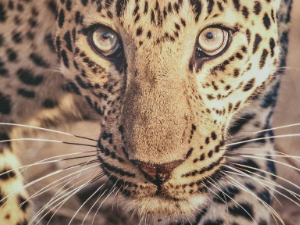
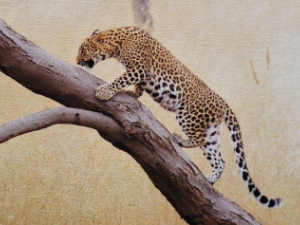
In the Footsteps of the Leopard – INDIA and AFRICA
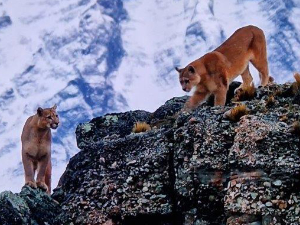
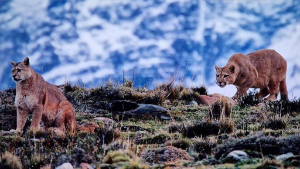
The Puma Triangle – CHILE
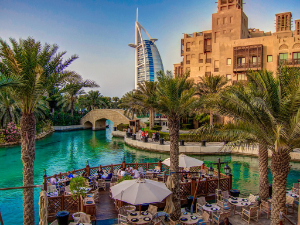
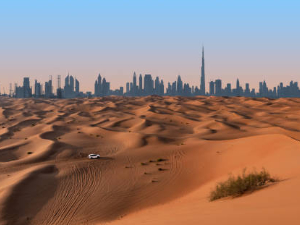
The Pearl of the Desert – DUBAI
TIGER EXPEDITION – INDIA
2022 was the Year of the Tiger, and there was some good news regarding the conservation of this magnificent big cat. According to WWF’s latest report, “Impact on Tiger Recovery 2010–2022,” the decline in tiger populations has finally been reversed, offering grounds for optimism. However, while the overall number of wild tigers is increasing, their range has continued to shrink, and today tigers are confined to an area equivalent to only 5% of their historical range.
Some of the highlights of the new report include the creation in China of the world’s largest protected area dedicated to tigers and the establishment of a national park in Russia, Land of the Leopard, where the number of tigers has tripled.
In Bhutan’s Royal Manas National Park, the use of the Spatial Monitoring and Reporting Tool (SMART) and other conservation measures has resulted in the tiger population doubling since 2012. The report also highlights the Khata Forest Conservation Area, which has expanded from just 115 hectares of forest to 3,800 hectares, involving more than 6,000 community members and land managers. This cross-border corridor between India and Nepal, recently recognised for excellence in conservation, has been used by 46 tigers over the past five years.
“These achievements deserve to be celebrated, but we must recognise that they remain fragile and uneven across the different sub-regions of Asia: a dangerous decline in tiger numbers has occurred in Malaysia and Cambodia. In Laos and Vietnam, these extraordinary big cats are now probably extinct,” WWF points out.
During the previous Year of the Tiger, in 2010, the Global Tiger Initiative was created and the first international meeting dedicated to tiger conservation, the St. Petersburg Tiger Summit, was held. The event and the initiative triggered unprecedented international cooperation among the governments of the 13 countries within the tiger’s range and the global conservation community, working towards a common goal of recovering the species. A crucial moment was expected to be the second Global Tiger Summit on 5 September 2022 in Vladivostok, Russia. Heads of state and ministers from the countries involved were due to meet other world leaders, intergovernmental organisations, NGOs and conservation experts to determine the next phase of the global tiger recovery plan. Among the possibilities was the establishment of a new and ambitious target for expanding the tiger’s range.
“The 2010 Tiger Summit set in motion an unprecedented series of tiger conservation initiatives,” explains Stuart Chapman, leader
of the Tigers Alive Initiative. “The results demonstrate what can be achieved through long-term commitments and collaboration for
species recovery. The dedication of field teams, conservation partners and communities living in tiger countries lies at the heart
of these extraordinary results.”
According to Margaret Kinnaird, leader of WWF’s Wildlife Practice:
“As we reflect on a decade of action to protect tigers, we must not forget that these extraordinary big cats remain seriously
threatened by poaching and habitat loss. If we want this increase to continue, governments need to do more, particularly in certain
parts of Southeast Asia.”
Our Tiger Expedition has been a success, and we want to repeat it several times together with you, because travelling is
wonderful, but with Wilderness Experience it is even better.
There are only a few sanctuaries in the world where tigers can be seen, and accommodation facilities such as camps and lodges
have very limited capacity.
Considering that requests come from all over the world, it is clear that the group needs to be finalised as early as possible.
For this reason, we ask you to confirm your participation promptly.
Bookings will be registered according to the date on which confirmations are received, and once the maximum number of participants
has been reached, registration will automatically close.
The presence of our G.M. Stefano Sciarma, one of the most experienced professional guides working internationally, will certainly be an added value, especially considering that he personally designed this journey.
The heart of this journey is the
BANDHAVGARH TIGER RESERVE
Our aim is to share an authentic and unforgettable escape where you can become immersed in nature and see the majestic Bengal tigers in a lesser-visited part of central India. The reserve lies in the heart of Madhya Pradesh in central India and is renowned for having one of the highest densities of wild Bengal tigers in the world.
TIGER SAFARI
Bandhavgarh is famous for having one of the highest densities of Bengal tigers in the world. We organise sunrise and afternoon safaris in our jeeps, accompanied by English-speaking guides who are experts in tiger tracking and behaviour. Your guides will also take you to places where you can see and hear numerous birds and other animal species. The entrance gates are Tala, Magdhi and Khitauli.
HISTORICAL SITES
Bandhavgarh National Park takes its name from the largest hill in the reserve.
Located at the top of the hill and dating back more than 2,000 years, Bandhavgarh Fort is one of the oldest forts in India. It contains
more than 100 monolithic caves, originally used for worship by Hindu monks and now inhabited by tigers. The Lord of the Fort,
Lakshmana, is still worshipped as a deity at the fort.
Nearby, peaceful and serene in the wilderness of Tala, lies Sheshshaiya. This monolithic sandstone statue of Lord Vishnu
reclining on a seven-hooded serpent beside a pool of water is well worth a visit.
More information about BANDHAVGARH
Bandhavgarh Tiger Reserve
Bandhavgarh National Park is one of the best parks for seeing a tiger in the wild in India, and probably in the world.
Located in the Umaria district of Madhya Pradesh, the park was once a Shikargah, or hunting reserve, for the Maharajas of
Rewa and their guests. The park was declared a National Park in 1968 and a Tiger Reserve in 1972 under Project Tiger and the Wildlife
Protection Act.
In 1982, three other nearby mountain ranges — Khitauli, Magdhi and Kallawah — were incorporated together with Tala, the original
Bandhavgarh National Park, to form the present-day Bandhavgarh National Park. The buffer zone includes the forest divisions of Umaria
and Katni. Bandhavgarh is famous for having one of the highest densities of Bengal tigers in the world. The park is closely associated
with some of its original and most famous inhabitants.
Charger, the first healthy resident male recorded in Bandhavgarh from the 1990s, together with a tigress named
Sita, became among the most photographed tigers in the world and appeared on the cover of National Geographic.
Charger died in 2000, and his body is buried at Charger Point, now a tourist attraction, where he spent the final years of his life.
Between 2003 and 2006, many of his descendants met unfortunate ends.
B2 became the alpha male following Charger’s death. After mating with a female in the Siddhababa area of Bandhavgarh,
he fathered three cubs. One of them was a male named Bamera. He was first spotted in Tala in 2008 and became the most
famous and dominant tiger in Bandhavgarh until relatively recently.
Blue Eyes and Mukunda were respectively the dominant tigers of the Magdhi and Khitauli areas. Other famous
tigers include Rajbehra, Mirchaini, Banbehi, Spotty, Sukhi Pattiya and Damdama.
The parks are open from 1 October to 30 June each year. The peak season runs from October to March, while summer
temperatures can often become extremely hot.
However, the months from March to June are ideal for better tiger sightings because most of the vegetation in Bandhavgarh dries out.
RESPONSIBLE TOURISM
“We firmly believe that we are part of the natural system, not above it.”
At Wilderness, we believe that local communities are a vital key to shaping the future of forests. Their participation, experience and
knowledge of the land can help preserve wildlife. To protect our forests, we help them improve their ability to earn a living, thereby
contributing to better standards of living. To ensure the prosperity of our natural habitats, we must respond to their needs and
concerns while remaining inclusive and symbiotic.
We continually strive to provide our guests with the best possible experience while integrating the conservation of jungles and the
communities living around them. Although it may seem like a drop in the ocean, we believe that, slowly but steadily, we are making
a meaningful contribution to wildlife conservation and to the development and preservation of rural economies around all our lodges.
Minimise environmental and ecological impact by choosing environmentally friendly purchasing and energy-saving products
whenever possible throughout our lodges and by educating our staff. We hope to change the attitudes of the many people working in our
various lodges and to build a strong institutional culture.
Maximise our impact by employing and sourcing locally whenever possible. “Globally local” is the principle by which we live.
We encourage and educate our guests to discover indigenous skills, social and cultural practices, and local ways of life through village
visits and interactive sessions.
We are passionate about using locally grown and locally sourced food. Not only is it fresher, but it also supports small-scale farmers and
local markets. Many of our lodges have organic vegetable and herb gardens providing fresh ingredients. Our menus are designed to celebrate
local ingredients and vegetables and to delight your senses. Fresh, simple, local, regional and seasonal food is served throughout our lodges.
We try to minimise the use of packaged and processed foods.
Option 1: 8 days
Option 2: 12 days with an extension to Varanasi and Agra (Taj Mahal)
To receive the detailed itinerary and prices:
Call:
349 3974860
333 2097430
Or email:
info@wildernessexp.it
stefanosciarma@gmail.com
KING KONG KINGDOM – UGANDA
On the occasion of World Gorilla Day, celebrated on 24 September, WWF highlighted how mountain gorillas, after coming close to
extinction, are finally increasing in number. At one time, only 254 of these primates remained in the Virunga Mountains. Today there
are more than 1,000 between Rwanda and Uganda, with one of the key factors behind this success being the determined fight against
poaching carried out in recent years. Overall, conservation efforts aimed at protecting mountain gorillas continue to produce good results.
Four years earlier, the species moved from the “Critically Endangered” category to “Endangered” on the
IUCN Red List.
Despite the increase in population and the record number of births recorded in 2021, with 24 new babies, the species remains at risk.
Poaching is not the only threat to the survival of these primates. Climate change, the spread of diseases and deforestation are also
factors that can have serious consequences for the remaining populations of this fascinating primate.
Gorilla Tracking, meaning the tracking and observation of gorillas, is probably the main reason why many people decide
to travel to Uganda.
Uganda, Rwanda and Congo are the three countries where it is possible to enjoy this exceptional experience, allowing
lucky permit holders to walk just a few metres away from the gorillas and observe them during their daily lives, when they are generally
eating or sleeping.
It is a very expensive experience, but one that is worth every cent.
It should also be remembered that the revenue generated by tourism helps finance the conservation system surrounding mountain gorillas.
So take our word for it: it is money well spent.
What is the best season for Gorilla Trekking?
Although mountain gorilla tracking can be done throughout the year in both Uganda and Rwanda, the dry season is generally preferred, from June to September and again from December to February, during the period of lighter rainfall.
Where to see Gorillas in Uganda
There are two parks where gorilla tracking can be done in Uganda:
Bwindi Impenetrable Forest and Mgahinga National Park.
The number of permits is limited, so it is very important, particularly when travelling during the high season, to reserve your
permit well in advance.
At present, the Uganda Wildlife Authority (UWA), the government body responsible for tourism in Uganda,
issues 104 gorilla permits per day, allowing visitors to see 15 habituated gorilla families distributed across four
sectors of Bwindi National Park.
An additional eight permits are issued in southern Bwindi, where two gorilla families live.
Mgahinga National Park, on the other hand, hosts only one group and therefore issues just eight permits per day.
Demand for gorilla trekking permits is extremely high during the peak seasons from June to September, as well as during December,
January and February.
All gorilla permits are issued by the UWA offices in Kampala and cannot be purchased online, making it necessary to rely on an
operator such as Wilderness Experience.
Where to do Gorilla Tracking in Uganda
Gorilla tracking can only be done in four national parks in Africa:
- Bwindi Impenetrable National Park in Uganda
- Mgahinga Gorilla National Park in Uganda
- Virunga National Park in Congo
- Volcanoes National Park in Rwanda
Uganda is particularly special because it is home to around half of the remaining mountain gorilla population, living in
two national parks: Bwindi and Mgahinga.
Bwindi Impenetrable Forest National Park has been a UNESCO World Heritage Site since 1994 thanks to its remarkable
biodiversity.
In addition to mountain gorillas, Bwindi is home to 120 species of mammals, including small antelopes, giant forest
hogs, African golden cats, side-striped jackals and African civets. Visitors may also encounter several primate species, including
chimpanzees, L’Hoest’s monkeys and black-and-white colobus monkeys, as well as 220 species of butterflies and 310 species of birds.
Mgahinga National Park is Uganda’s smallest national park and lies at the foot of three dormant volcanoes. Unlike
Bwindi, Mgahinga is an extension of the Virunga region and forms part of the larger conservation area that includes Virunga National
Park in Congo and Volcanoes National Park in Rwanda.
Its main attractions are the rare mountain gorillas and golden monkeys.
Why the Wilderness Experience team chooses Bwindi Impenetrable Forest
Bwindi Impenetrable Forest National Park, also known as “The Place of Darkness” because of its dense tree canopy, is an
ancient forest covering approximately 330 square kilometres. The region was designated a UNESCO World Heritage Site in 1994 because of
its extraordinary biodiversity and the large number of endangered species living there. It is known as the
“impenetrable forest” because much of the area is extremely difficult to access and can only be reached on foot.
Approximately 45% of the world’s mountain gorilla population lives in Bwindi. It is a much larger park than
Mgahinga and hosts more than 35 gorilla groups, 15 of which are habituated to human presence and can therefore be visited
through gorilla tracking.
Mgahinga, by comparison, has only one habituated gorilla group.
In Bwindi, gorilla tracking can take place in four different sectors of the park, each of which is home to more than one
gorilla family.
Two groups in the Nkuringo and Rushaga sectors offer visitors the opportunity to participate in the
Gorilla Habituation Experience. This experience is limited to only four visitors and allows participants to spend four
hours with the gorillas, compared with the one hour permitted during standard gorilla tracking.
This experience is available only in Bwindi.
However, Mgahinga also has some advantages that should be considered.
For several years, operators avoided this park because its gorilla family regularly moved between Uganda, Rwanda and Congo.
Since 2013, however, the family has returned to Uganda and has remained there, making sightings currently very likely.
Of course, the possibility that the gorillas could move again one day still exists, and nobody can say whether or when this might happen.
Gorilla tracking in both Bwindi and Mgahinga can be physically demanding, as the trekking takes place over rough and
steep terrain. There are, however, differences between the two parks.
Because of Mgahinga’s smaller size, the Nyakagezi group in Mgahinga is generally easier to locate than the gorillas in
Bwindi. Bwindi, on the other hand, is an enormous forest, meaning visitors may have to walk for longer and make greater physical efforts.
Those interested in photography may also want to know that Mgahinga extends across mountainous terrain rather than dense
forest. On clear, sunny days, taking photographs can therefore be easier because of the better lighting.
And let us not forget that this park is home to the four silverback brothers!
While visitors tracking gorillas in Mgahinga may encounter endangered Golden Monkeys, those trekking in
Bwindi may encounter chimpanzees. Both parks therefore offer potentially fascinating additional wildlife
encounters.
Bwindi National Park is strategically located only around two hours from Uganda’s largest and most famous national park,
Queen Elizabeth National Park. If you are travelling along a classic Uganda itinerary, Bwindi is therefore certainly a
logical choice.
On the other hand, trekking enthusiasts will be pleased to know that visiting Mgahinga offers the possibility of trekking
on volcanoes. Uganda has three to choose from:
- Mount Muhavura
- Mount Sabinyo
- Mount Gahinga
Reaching the summit of one of these volcanoes offers incredible views over Mgahinga National Park, as well as the opportunity to see birds, forest mammals and primates such as golden monkeys.
How much does a Gorilla Tracking permit cost?
The Gorilla Tracking permit costs US$700 per person.
In the past, permits were available at discounted rates during the low season, but since 2018 the cost has remained fixed regardless of
the season or the participant’s age.
The permit is valid for only one day, and if no gorillas are seen, no refund is provided and visitors are not allowed another
attempt on subsequent days.
Bwindi issues 104 permits per day. Mgahinga issues only 8. For this reason, it is extremely important to book permits
well in advance to secure one of the limited places. Booking at least 10 months in advance is recommended when travelling during peak
season.
The minimum age for gorilla tracking is 15 years.
Tracking is prohibited if you have flu symptoms or are ill. Smoking in the park is not allowed, and the use of flashlights
or unnecessary noise in the presence of gorillas is prohibited.
The Gorilla Habituation Experience costs US$1,500 per person, and only four permits are available per day.
Is Gorilla Trekking demanding? How many hours does it take?
Mountain gorillas live in high-altitude areas, so the trek required to reach a gorilla family can potentially be
physically demanding. Bwindi is a forest with dense undergrowth, thorny bushes and shrubs that make walking difficult.
The terrain is also frequently wet and slippery.
Mgahinga extends across mountainous terrain, and the search for gorillas often takes visitors to higher altitudes. It is therefore
advisable to undertake the trek with hiking poles to assist with the climb.
It is impossible to predict how long it will take to locate the gorilla family. Some visitors need only one hour,
others three hours, while some may spend an entire day. Everything depends on the location of the gorilla family on that particular day,
as gorillas can move quite quickly.
It is worth remembering that trackers enter the park every day at 6:00 a.m., search for the gorilla families and communicate their
positions to rangers and guides by walkie-talkie, helping direct the tourist groups towards the correct location.
Is seeing the gorillas guaranteed?
When dealing with wild animals, nobody can guarantee a sighting. However, generally 99% of visitors encounter the gorillas.
The main reason why the remaining 1% fail to do so is usually because they are unable to keep up with the trekking pace and decide to
return to the starting point. The duration of the trek varies, and the time required to reach the gorilla family depends entirely on the
circumstances of that particular day.
Is the US$700 permit worth it?
Absolutely yes!
If the cost of the permit is too high but you are interested in primates, consider taking part in chimpanzee tracking,
which costs US$150 per person and can be just as enjoyable and rewarding. If you believe these costs are too high,
remember that by paying for the permits you are actively contributing to the protection of these magnificent animals. This is another
reason behind the high price of this very exclusive activity.
It is expensive, complicated and tiring, but once you are just a few metres away from these magnificent creatures, all the effort
disappears. And the hour you are allowed to spend with them flies by.
Sitting quietly for 60 minutes on the cold ground of a Ugandan forest could be one of the greatest privileges and one of the most
unforgettable experiences of your life. There are only a little over 1,000 mountain gorillas in existence, and trekking in search of
these primates offers a rare opportunity to observe the daily interactions of these gentle and mysterious animals.
Mountain Gorillas
The gorilla is the largest living primate and belongs to the family of great apes, which are among the animals evolutionarily closest to humans after chimpanzees and bonobos. They are massive animals with broad chests and shoulders, large hands and forearms that are much shorter than their upper arms. Their faces are black and hairless, with small, closely set eyes and large, prominent nostrils.
The two gorilla species both live in Africa and are divided into western gorillas and eastern gorillas.
The western gorilla is further divided into two subspecies:
- the western lowland gorilla, which has the larger population and lives in Angola, Cameroon, the Central African Republic, Congo, the Democratic Republic of the Congo, Equatorial Guinea and Gabon;
- the Cross River gorilla, whose population is smaller and which lives along the border between Cameroon and Nigeria.
The eastern gorilla lives in the Democratic Republic of the Congo, Rwanda and Uganda and is itself divided into two subspecies:
- the mountain gorilla, with slightly more than 1,000 individuals;
- the eastern lowland gorilla.
Mountain gorillas are highly social animals that live in groups ranging from 5 to 50 individuals. These groups have a clear hierarchy
headed by a dominant silverback male, named after the characteristic silver-grey colour of the hair on his back.
Mountain gorillas can be distinguished from other gorillas by their longer and darker fur, which takes on the characteristic silver-grey
colour on the backs of adult males. Males can weigh between 140 and 180 kg, while females generally weigh between
70 and 110 kg.
They are considered diurnal and terrestrial animals. Although they are capable of climbing trees, they are the primates best adapted to
life on the ground. They generally move on all fours, although they can also walk short distances upright on two legs, just like humans.
Gorillas are predominantly vegetarian and spend approximately 30% of their day feeding on stems, bamboo shoots, fruit and bark. Another
30% of their time is spent moving or feeding while travelling, while around 40% is spent resting. An adult male can consume more than
30 kg of plant-based food per day, while a female may eat approximately half that amount.
For many years, the Wilderness Experience team has organised trips to Uganda and Rwanda featuring mountain gorilla tracking as the
main attraction.
If you are interested in participating in our next “King Kong Kingdom”, please remember that both the trip and the relevant gorilla tracking permits need to be booked extremely far in advance.
You therefore need to be prepared to make a quick decision regarding your participation.
To receive the detailed itinerary and prices:
Call:
349 3974860
333 2097430
Or email:
info@wildernessexp.it
stefanosciarma@gmail.com
IN THE FOOTSTEPS OF THE LEOPARD – INDIA AND AFRICA
Jhalana Leopard Reserve – INDIA
The Wilderness Experience team organises dedicated safaris in this beautiful reserve specifically for observing this magnificent big cat. The small reserve is home to around 45 leopards in just over 20 square kilometres. It is located near Jaipur, Rajasthan’s famous Pink City, approximately 260 km from Delhi, and can easily be included in either the Tiger Expedition itinerary or the Classic India programme.
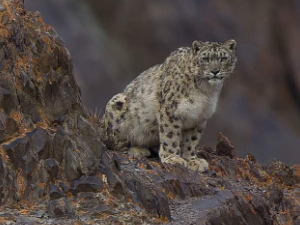
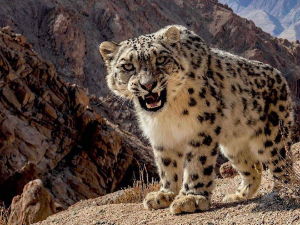
“Ghost” – Ladakh – INDIA
If you are in excellent physical condition, can tolerate cold temperatures and high altitudes, and are looking for a new challenge, this wilderness adventure could be the perfect journey for you. The aim is to search for one of the world’s most elusive ghosts: the legendary snow leopard.
Okavango Delta, Chobe N.P. and Matobo Hills – BOTSWANA and ZIMBABWE
Of course, we must not forget our African safaris, where leopards can be found in Botswana’s Chobe National Park and the Okavango Delta, as well as in Zimbabwe’s Matobo Hills.
For information, email: info@wildernessexp.it
THE PUMA TRIANGLE – CHILE
Designed for wildlife photography enthusiasts and lovers of big cats, this experience can also be added as an extension to a trip through Chile or Chile and Argentina.
The Puma, also known as the Mountain Lion, is generally a solitary animal. However, in certain areas of Chile it can sometimes be seen in small groups, showing that it can also display social behaviour. The vast Patagonian steppe, both inside and outside Torres del Paine National Park in southeastern Chile, is undoubtedly one of the best areas in which to search for and observe these magnificent animals. Pumas are found here in relatively high concentrations, particularly because of the abundance of guanacos, their main prey.
Guanacos are herbivores belonging to the camelid family and can be found in Peru, Bolivia, Argentina and Chile. An adult can weigh approximately 90 kg and can run at speeds of almost 60 km/h over steep mountain terrain.
They are not easy prey for pumas. Guanacos use sentinels to scan the surrounding territory from panoramic viewpoints. When a puma is detected, they emit a characteristic alarm call to warn the rest of the group of the danger.
When there is little cover available to help it approach its prey, the puma must move slowly and silently until it is within less than ten metres of the guanaco, giving it a realistic chance of launching a successful attack.
Observing pumas in such a wild, remote and fascinating natural environment is unquestionably a true Wilderness Experience.
This exclusive excursion can last for up to four days and, as mentioned, can be a natural extension to trips through Chile and Argentina, particularly visits to Torres del Paine National Park in Chile and Perito Moreno National Park in Argentina.
All of this takes place within the context of a journey through some of the most extraordinary places on our planet.
For information, email: info@wildernessexp.it
DUBAI – “THE PEARL OF THE DESERT”
Experience all the charm of Dubai and the United Arab Emirates with high-quality services that truly make the difference, organised through our Wilderness operational office in Dubai.
A complete immersion allowing you to choose from a wide range of fantastic options designed to meet every type of requirement.
- Tailor-made tours in Dubai
- Excursions to Abu Dhabi and other fascinating destinations in the United Arab Emirates
- Abu Dhabi Formula 1 Grand Prix
- Extensions to Qatar and Oman
- Supercar rentals
- Viewing and purchasing apartments in Dubai
- Yacht tours
- La Perle theatre show
- Incentive travel
- Business travel
For information, email: info@wildernessexp.it

© Wilderness Experience Tour Operator - wildernessexperience.eu - wildernessexp.it - vip-italy.com